“I bring out what is expressive in reality; I simply present, without digression, the core of something.” ~ Gabriele Münter
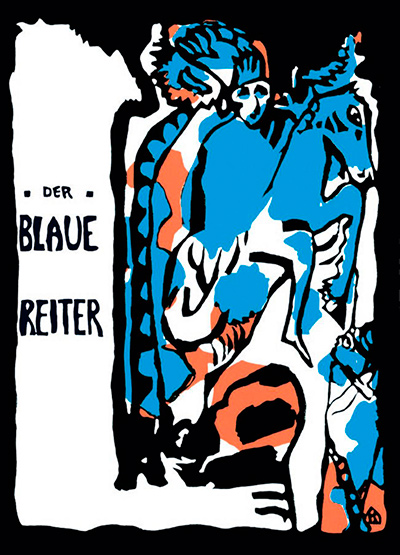
In 1911 Gabriele Münter became a founding member of the art group/movement Der Blaue Reiter, The Blue Rider. The group was formed by Wassily Kandinsky and included other artists such as Franz Marc, Alexi Jawalensky, Mairanne Werefkin, Alfred Kubin, and August Macke (Koerner von Gustorf, n.d.). The group was formed because the art-world was pushing back against furthering the expressive qualities in paintings and the artists felt it stifled creativity. The evolution of color, symbolism, and perspective during the time of The Blue Rider is often credited as allowing for the development of German Expressionism (theartstory.org, n.d.).
The formation of the group came about when Kandinsky’s work Composition V was rejected for exhibition in The New Artists’ Association of Munich’s upcoming show (Koerner von Gustorf, n.d.). Kandinsky was a founding member and director of the Association at the time, but tensions had been coming to a head between the more conservative members of the group and those that wanted to push the boundaries of expression in art. The Post-Impressionism that the Association dealt with had already progressed art interpretation to encourage play with movement and the effects of light, but some seemed content with style and refused the notions of adding an inner expression of one’s own perspective to art.
Kandinsky was in particular a proponent of color and it has been speculated from his writings that he had synesthesia, a condition where stimuli like color can actualize through senses other than just sight (wassillykandinsky.net, 2018). Many of the artists like Münter who formed The Blue Rider group are known artistically for their use of expressive color and form. No official manifesto of the group exists, but the artists all shared an interest in using color and form to express spiritual views. Even the name The Blue Rider holds symbolic meaning; although the story on how the name came about varies in details, it is known the color blue was thought to hold the most spiritual meaning and rider refers to the ability to progress forward (theartstory.org, n.d.). The name was created to show the group’s yearning to move beyond traditional boundaries of art at the time in a way that could connect the artist with painting on a spiritual level.
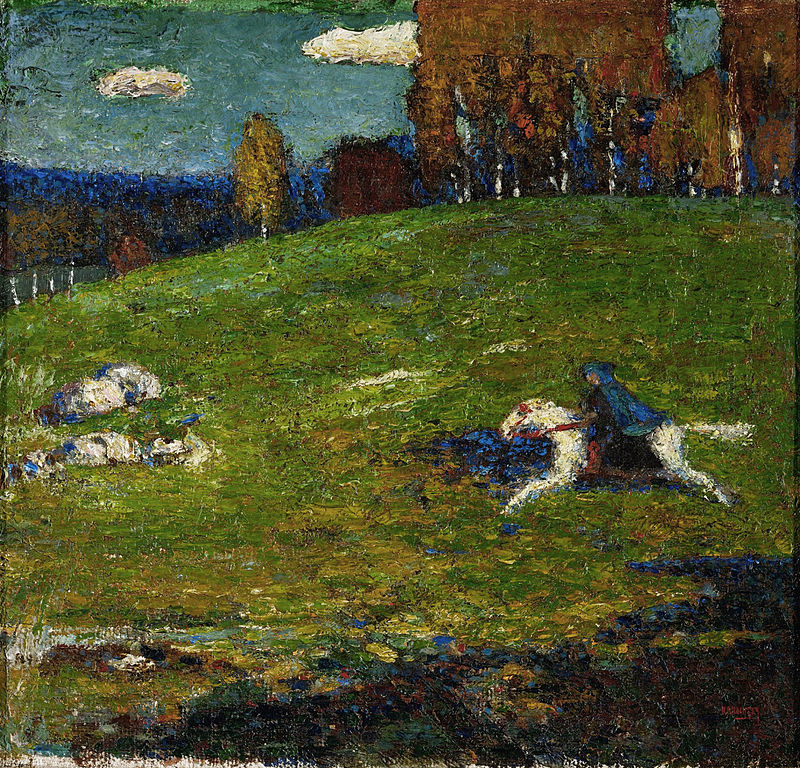
Münter’s produced many paintings during this time that showed in the group’s touring exhibitions; The Blue Rider consisted of avant-garde artists of the era and became known for exhibiting cutting-edge styles like Fauvism and Cubism. The group also produced The Blue Rider Almanac which contained some of the member’s philosophical writings on modern art movements and images of new works created by its members. Only one issue was published in the group’s short time; a second volume was meant to run in 1914, but the outbreak of the First World War precluded the publication and The Blue Riders were forced to disband and return to their countries of origin. Artists like Jawlensky, Werefkin, and Kandinsky were Russian emigrants and were effectively considered enemy aliens when Germany declared war on their home country (P.W., 2013).
The war may have put a formal end to the group, but disagreements had built tensions to the point that had the war not broken out, it is unclear what the future would of been for the group of artists. Münter’s devotion to Kandinsky meant that she would go wherever he did and the unpredictable nature of the artists’ temperaments caused strife within groups. The second and last exhibition from The Blue Rider group was in 1912 and already tensions were growing between Münter and her fellow artists. Münter was notorious for her difficult demeanor and critical opinions about art. (Koerner von Gustorf, n.d.)
The second exhibition was called Black and White and consisted of works on paper; Münter had long regarded sketches as inferior to paintings and did not hold back when critiquing others. Not long after the exhibition, The Blue Rider member Franz Marc wrote to August Macke saying, “Now it’s over with! At least it won’t take too much longer. In any case, this stupid woman spit on my friends from The Blue Rider… and I could punch her face in” (Koerner von Gustorf, n.d.).
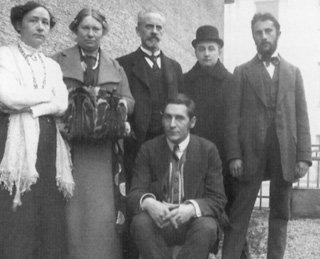
The differences in personal opinions seemed to have caused a serious rift between artists in the group and even after the war was over they never resumed their affiliation. In 1923, however, a few of the Russian artists came together under the name Der Blaue Vier, The Blue Four, and began touring their art once again (wassillykandinsky.net, 2018). Münter was not associated with The Blue Four, her relationships with many of the artists she once knew would never recover.
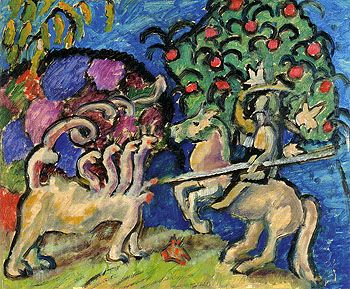
The Blue Rider became a critical piece of the German Expressionist movement. The group’s insistence on adding bold, spiritually significant colors and symbolism to modern interpretation helped progress art to what we know it as today. Regardless of her opinions and interactions with other artists, Gabriele Münter helped found a group that would change the way artistic views are expressed and lay the foundations for Expressionism.
- Art Groups. (2018). Retrieved from https://www.wassilykandinsky.net/artgroups.php
- Koerner von Gustorf, O. (n.d.). Profession: Woman Artist. Deutsche Bank Art Magazine. Retrieved from https://db-artmag.de/archiv/04/e/magazin-muenter.html
- P.W. (2013). This is the house we used to live in. The Economist. Retrieved from https://www.economist.com/prospero/2013/05/24/this-is-the-house-we-used-to-live-in
- The Art Story. (n.d.) Der Blaue Reiter Movement, Artists and Major Works. Retrieved from https://www.theartstory.org/movement-der-blaue-reiter.htm

 Express Yourself: The Art of Gabriele Münter