Münter’s Future: A Legacy in Art

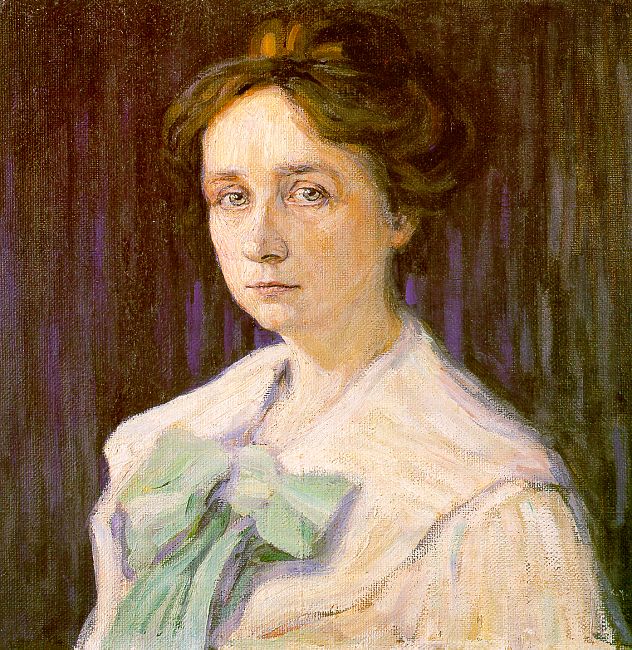
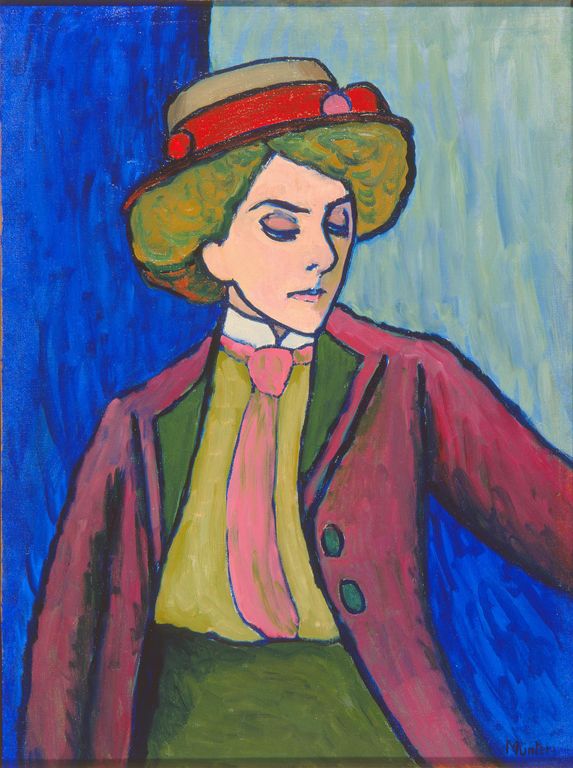
Portrait of a Young Woman by Gabriele Münter, 1909

It is all too easily forgotten that a woman can be a creative artist with a real, original talent of her own.” ~ Gabriele Münter

     Gabriele Münter died in 1962 leaving behind one of the most extensive collections of German Expressionism that included personal works, pieces by Kandinsky, as well as other artists from the group The Blue Rider. Münter was a professional artist her whole life, dedicated to the advancement of emotional artistic interpretation; the question of what to do with a life’s accumulation of great artworks found its natural answer in museum education.

     Münter actively painted for over sixty years and it is estimated that she created over 2,000 paintings, thousands of drawings, and nearly 1,200 photographs (Art, 2018). Many works by Münter are still found in private collections and remain unknown to the art-world at large. The relationship between Münter and art historian Johannes Eichner would prove beneficial in the conservation of important historical documentation and artwork. The pair met in 1927, beginning an intimate relationship two years later that would last the rest of their lives.

     Eichner recognized the genius in Münter as well as her counterparts from early German Expressionism; he studied their works and wrote philosophical treatises on the art of both Münter and Kandinsky (muenter-stifting.de, n.d.). Münter and Eichner well recognized the historical impact the collection held and that the ability to study it for the furtherance of artistic interpretation was paramount after their deaths. Eichner passed away in 1958 and Münter in 1966, both had planned well and wrote in their wills a plan to establish a foundation.
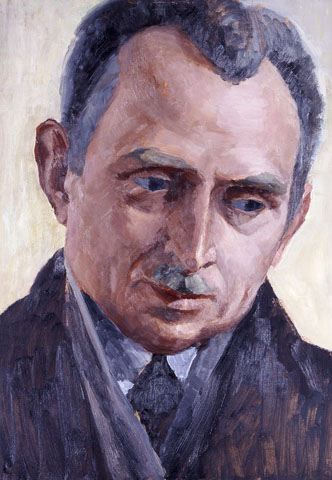
Johannes Eichner, n.d.

     The Gabriele Münter and Johannes Eichner Foundation began operation in 1966 and has kept safe the artist’s works, documents, and house for the future study of German Expressionism. Münter’s home in Murnau, Germany is especially important, even some of the walls bear artistic touches from some of Expressionism’s most notable painters; the stairwell holds a frieze created by Wassily Kandinsky of riders going up the stairs (P.W, 2013). The foundation was inspired in part by Eichner’s close friend Hans Konrad Roethel who would become director of the Lenbachhaus Gallery (muenter-stifting.de, n.d.).

     Münter donated many significant works to the Lenbachhaus Gallery in Munich on her eightieth birthday in 1957, but there was still a plethora of valuable artwork for which to care (lenbachhaus.de, 2018). The Gabriele Münter and Johannes Eichner Foundation would see to it that the important Expressionist works were preserved for future generations to interpret and appreciate. The foundation currently works to serve the public through research programs designed to promote the artists and a more genuine understanding of the movement through their works.

     Münter’s collection held many pieces from other great artists as well. As a founding member of The Blue Rider, one of the most influential early German Expressionist art groups, Münter had kept works created by her peers; her lover Kandinsky famously had to let her keep more than 1,000 paintings when a court case over Kandinsky’s boorish behavior was settled in 1926 (P.W., 2013). The research projects supported by the foundation study the paintings by both artists and publish their studies in publications and exhibitions.

     A large goal of the Gabriele Münter and Johannes Eichner Foundation is to complete cataloging the artist’s oeuvre with information about each work’s provenance, dates, and possible literature on each piece (muenter-stifting.de, n.d.). A complete exhibition history helps researchers see what was current at the time of creation and how it was received by the public. Münter’s house has also been preserved and after renovations in the late 1990’s, now appears as it did when Münter and Kandinsky lived there at the height of the burgeoning Expressionist movement in Germany.
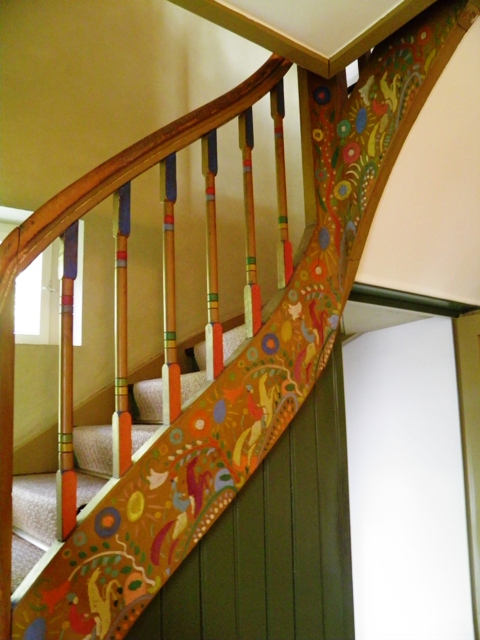
Frieze by Wassily Kandinsky in Münter’s home in Murnau, Germany

     Münter’s home in Murnau is now a museum dedicated to the art of her and Kandinsky; the house is full of their crafts featuring reverse glass paintings, hand printed furniture, and artistic works adorning the walls (P.W., 2013). The museum helps visitors understand better the artistic styles in Germany before the start of the First World War; here people can imagine themselves a part of the movement toward a more transcendental interpretation of not just art, but of the world.

     Gabriele Münter was a cornerstone of the early German Expressionist movement and when she died in 1962, she left behind one of the most extensive collections of the period. Her bequest included personal works, pieces by Kandinsky, and other artists from the group The Blue Rider. A professional artist her whole life, Münter was dedicated to the advancement of emotional artistic interpretation and when the question of what to do with her life’s accumulation of great artworks came about, it found its natural answer in museum education. Münter’s legacy lives on through research, publication, exhibition, and most importantly emotional interpretation thanks to the Gabriele Münter and Johannes Eichner Foundation; and thanks to her.
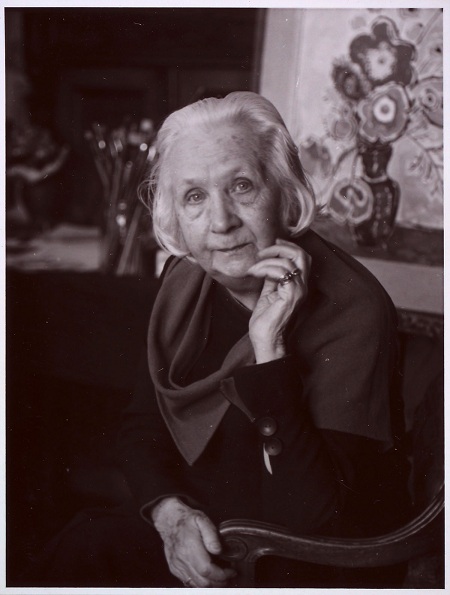
Gabriele Münter, n.d.

Münter and War: Saving ‘Degenerate Art’

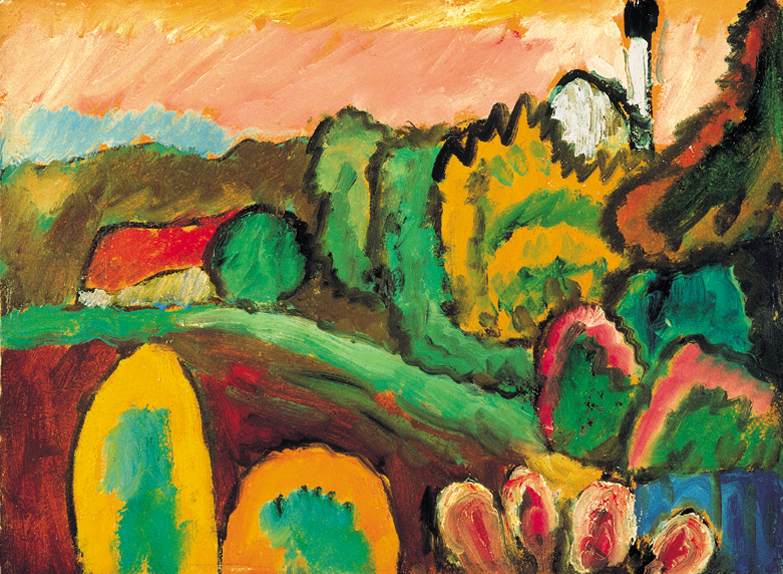
Village sur la Colline by Gabriele Münter, 1911

I never sought to ‘overcome,’ destroy or even disparage nature.” ~ Gabriele Münter

     Gabriele Münter was an early German Expressionist painter who was born in 1877 and died in 1962, times that were both progressive and devastating for the European continent. As a German citizen, Münter was caught up in war’s destructive force and as a non-traditional female artist, she was a target. Münter took great care through both wars to hid away artworks during the first and second world wars; it is thanks to her in particular that the world still has many great works of Expressionism.

     World War Two was particularly harsh on artists in Europe, the Nazi regime was known for their destructiveness. The National Socialist German Workers’ Party, precursor to what is now known as the Nazi Party, began their movement in 1920 and determined that modern-art movements were a manifestation of society’s degraded nature (Levi, 1998). The term ‘degenerate art’ was coined early on as a label for anything that wasn’t inherently classically German in nature.

     Degenerate art encompassed nearly all of the modern art movements like Impressionism, Post-Impressionism, Fauvism, Cubism, Abstract, and Expressionism; anything that encouraged a freedom of emotional and spiritual interpretation was regarded as suspect (Levi, 1998). The years preceding the war were full of creative expression, artists in Germany exhibited their works in an attempt to move the culture forward; some people pushed back, however, and the Nazi movement gained momentum throughout the 1920’s alongside Münter’s exploration into Expressionism. By the early 1930’s Hitler had gained power as Chancellor of Germany, chipping away at other powers until becoming an autocratic dictator.

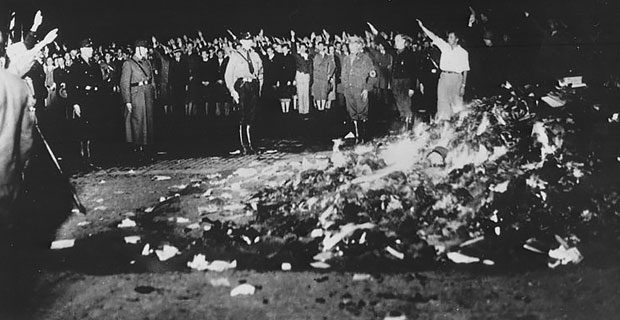
     House searches became a terrifyingly normal occurrence during the Nazi government and anything that was considered outside of traditional German culture was taken and destroyed. Using culture as a tool for oppression, German citizens were forced to burn books, records, and artwork as a visible pledge to the purity of their hearts and minds (Levi, 1998). Considered a valid German citizen, Münter escaped the very worst of Nazi capabilities; but as a known female modern artist, she did not escape scrutiny.

Nazi Book Burning, n.d.

     Münter was advised by her long term life-partner, Johannes Eichner, to paint scenes that would be more acceptable by Nazi standards, but Münter was unable to please them and in 1937 the public excoriated her current exhibition (P.W., 2013). Münter knew what was coming at this point; with Kandinsky’s works being declared degenerate art, her entire collection of expressionist paintings were in jeopardy of being seized by the government. At age sixty, Münter moved all of her art from Munich to her home in Murnau, Germany to keep it safe from the Nazis and the devastating effects of the war.

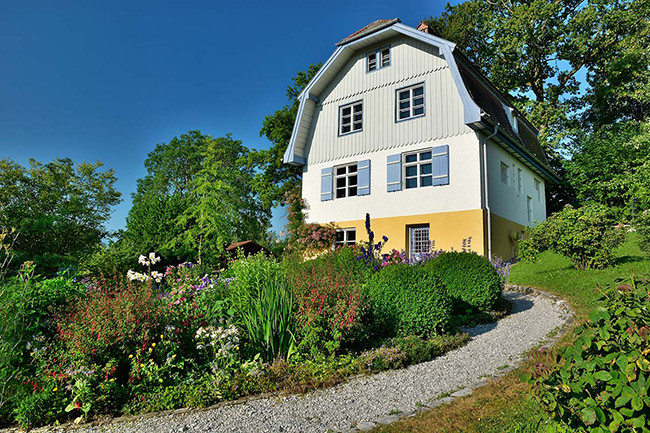
     Life in Murnau did not end Münter’s interactions with the Nazi party. Multiple house searches were conducted in an effort to find and confiscate Münter’s art collection (Koerner von Gustorf, n.d.). The searches revealed nothing though, Münter’s extraordinary foresight led her to hide the works in the basement behind false walls (P.W., 2013). The great fear was that the paintings would be burned like so many thousands of great pieces under the Nazi regime, but curiously that was not always the case with pieces that were declared degenerate.

     High ranking Nazis like Hermann Göring acquired pieces for personal use and in 1937 the Nazi party organized a Degenerate Art exhibition in Munich that saw more people attend than the neighboring exhibition of traditional German art (Levi, 1998). The Nazis sought to control the people by controlling the culture, but even their heavy handed scare tactics couldn’t seem to quell the interest in modern art; if anything, being verboten made it more compelling. Münter was right to hide her pieces though; even when they were not destroyed, many pieces were lost to their true owners forever through backchannel dealings and forged papers of provenance.

     Münter’s quick thinking and marked determination in the end saved the thing she loved the most, her art. It is because of Gabriele Münter that great works from the early German Expressionist movement still exists; her dedication to art and its preservation ensures that everyone has an opportunity to study these paintings and gain insight into one of the greatest art movements of the twentieth century.

Münter’s home in Murnau, Germany where she hid important artworks from the Nazis.

Münter and Der Blaue Reiter: Origins of German Expressionism

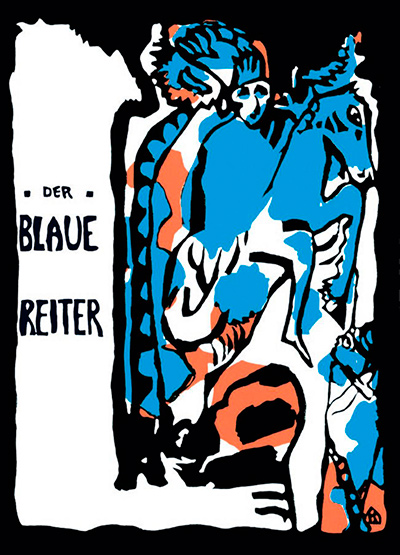
The Blue Rider Almanac, 1912

I bring out what is expressive in reality; I simply present, without digression, the core of something.” ~ Gabriele Münter

     In 1911 Gabriele Münter became a founding member of the art group/movement Der Blaue Reiter, The Blue Rider. The group was formed by Wassily Kandinsky and included other artists such as Franz Marc, Alexi Jawalensky, Mairanne Werefkin, Alfred Kubin, and August Macke (Koerner von Gustorf, n.d.). The group was formed because the art-world was pushing back against furthering the expressive qualities in paintings and the artists felt it stifled creativity. The evolution of color, symbolism, and perspective during the time of The Blue Rider is often credited as allowing for the development of German Expressionism (theartstory.org, n.d.).

     The formation of the group came about when Kandinsky’s work Composition V was rejected for exhibition in The New Artists’ Association of Munich’s upcoming show (Koerner von Gustorf, n.d.). Kandinsky was a founding member and director of the Association at the time, but tensions had been coming to a head between the more conservative members of the group and those that wanted to push the boundaries of expression in art. The Post-Impressionism that the Association dealt with had already progressed art interpretation to encourage play with movement and the effects of light, but some seemed content with style and refused the notions of adding an inner expression of one’s own perspective to art.

     Kandinsky was in particular a proponent of color and it has been speculated from his writings that he had synesthesia, a condition where stimuli like color can actualize through senses other than just sight (wassillykandinsky.net, 2018). Many of the artists like Münter who formed The Blue Rider group are known artistically for their use of expressive color and form. No official manifesto of the group exists, but the artists all shared an interest in using color and form to express spiritual views. Even the name The Blue Rider holds symbolic meaning; although the story on how the name came about varies in details, it is known the color blue was thought to hold the most spiritual meaning and rider refers to the ability to progress forward (theartstory.org, n.d.). The name was created to show the group’s yearning to move beyond traditional boundaries of art at the time in a way that could connect the artist with painting on a spiritual level.

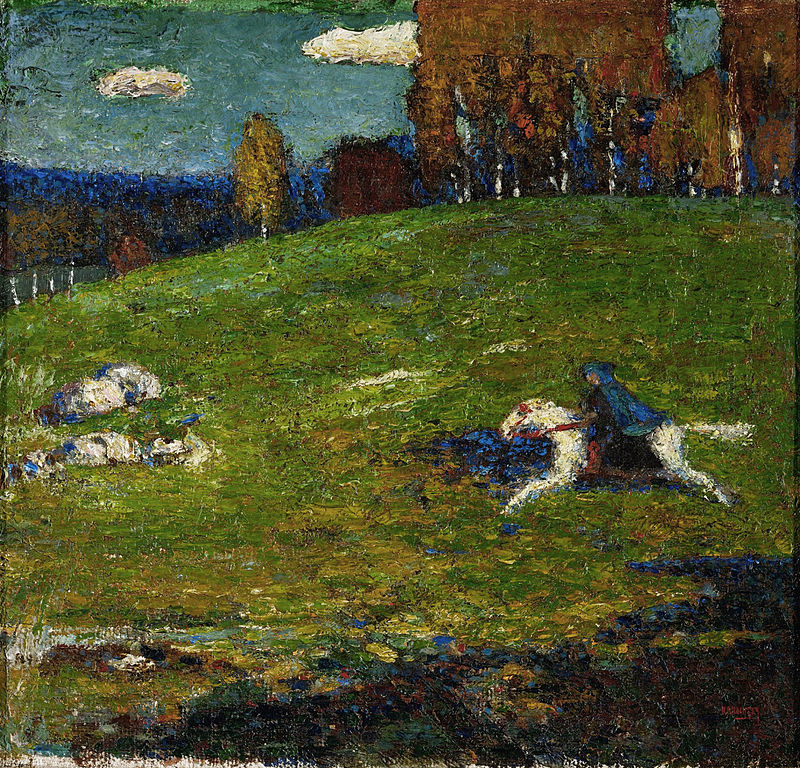
The Blue Rider by Wassily Kandinsky, 1903

     Münter’s produced many paintings during this time that showed in the group’s touring exhibitions; The Blue Rider consisted of avant-garde artists of the era and became known for exhibiting cutting-edge styles like Fauvism and Cubism. The group also produced The Blue Rider Almanac which contained some of the member’s philosophical writings on modern art movements and images of new works created by its members. Only one issue was published in the group’s short time; a second volume was meant to run in 1914, but the outbreak of the First World War precluded the publication and The Blue Riders were forced to disband and return to their countries of origin. Artists like Jawlensky, Werefkin, and Kandinsky were Russian emigrants and were effectively considered enemy aliens when Germany declared war on their home country (P.W., 2013).

     The war may have put a formal end to the group, but disagreements had built tensions to the point that had the war not broken out, it is unclear what the future would of been for the group of artists. Münter’s devotion to Kandinsky meant that she would go wherever he did and the unpredictable nature of the artists’ temperaments caused strife within groups. The second and last exhibition from The Blue Rider group was in 1912 and already tensions were growing between Münter and her fellow artists. Münter was notorious for her difficult demeanor and critical opinions about art. (Koerner von Gustorf, n.d.)

     The second exhibition was called Black and White and consisted of works on paper; Münter had long regarded sketches as inferior to paintings and did not hold back when critiquing others. Not long after the exhibition, The Blue Rider member Franz Marc wrote to August Macke saying, “Now it’s over with! At least it won’t take too much longer. In any case, this stupid woman spit on my friends from The Blue Rider… and I could punch her face in” (Koerner von Gustorf, n.d.).

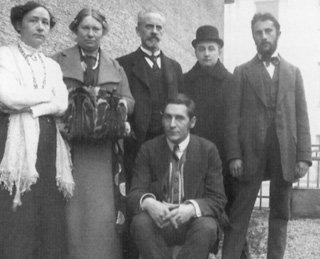
Members of The Blue Rider, 1913

     The differences in personal opinions seemed to have caused a serious rift between artists in the group and even after the war was over they never resumed their affiliation. In 1923, however, a few of the Russian artists came together under the name Der Blaue Vier, The Blue Four, and began touring their art once again (wassillykandinsky.net, 2018). Münter was not associated with The Blue Four, her relationships with many of the artists she once knew would never recover.

     The Blue Rider became a critical piece of the German Expressionist movement. The group’s insistence on adding bold, spiritually significant colors and symbolism to modern interpretation helped progress art to what we know it as today. Regardless of her opinions and interactions with other artists, Gabriele Münter helped found a group that would change the way artistic views are expressed and lay the foundations for Expressionism.

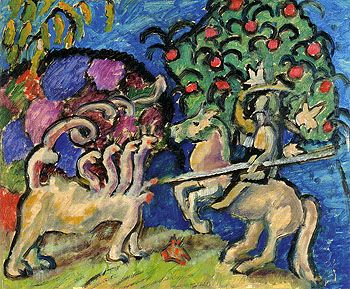
The Dragon Fight by Gabriele Münter, 1913

Münter and Kandinsky: An Unnecessary Side Dish

“In the eyes of many, I was only an unnecessary side-dish to Kandinsky. A woman standing alone…can never gain recognition through her own efforts, other ‘authorities’ have to stand up for her.” ~ Gabriele Münter

      Readers of this blog’s earlier entries may be wondering; what about Kandinsky? Surely the Russian born artist was such an important part of Münter’s life that any mention of her should reference him enthusiastically. It is true that Münter and Kandinsky’s relationship profoundly affected both; the two great painters were associates, confidants, partners, and lovers. History is often written by those in power, however, and for much of history women have traditionally not held as much power as men; a result of this fallible design is that many important women have come to be defined by their relationships to men.

     Whether by being lovers, mothers, or friends; artistic accomplishments especially are often attributed to the men with whom women associate. The observation is not meant to be a harsh criticism of gender or culture, merely a realization that the opportunity is there to create a different narrative; one that includes the contributions of women for their own accomplishments. The author is careful, therefore, to not sum up either artist’s abilities as a product of their relationship regardless of the strong influences. The placement of this entry is purposeful; Kandinsky was a powerful source of learning and development for Münter, but does not get to solely define who she was as an artist.

     Münter and Kandinsky’s relationship was short in the grand scheme of life, twelve (ish) years, but the limited time did not lessen the immense impact the two painters had on one another; both were ultimately transformed by the way in which their relationship encouraged expressionist development. They met in 1902 when Münter enrolled at the ultra-modern art school Phalanx, of which Kandinsky was a founding member and teacher (wassillykandinsky.net). The Post-Impressionist style of art taught at the school was not the only thing that pushed the boundaries of what was expected the time, the school also admitted women; something not widely practiced by other academies. Münter would later say of this time with Kandinsky, “He understood, protected, and furthered [my] talent” (Bachrach, 1981).

Phalanx Art School

     The teacher and student quickly developed a deep connection through their mutual appreciation of new art theories and soon began an intimate relationship. There was a problem however, Kandinsky was married. This fact would continue to plague the two artists as their relationship evolved along a natural continuum, but in the beginning they were consumed by the heady mix of emotional and physical attraction. The couple was content to sneak around the first couple of years; during one summer class stay in Bavaria, Münter departed in haste when Kandinsky’s wife Anja unexpectedly arrived (Koerner von Gustorf, n.d.). They kept this secrecy for a brief period and by 1904 Kandinsky separated from his wife to begin living with Münter full time.

     The couple traveled over the next four years visiting places in North Africa and Europe, honing their abilities and experimenting with the artistic styles they encountered. Münter was especially taken with the art scene in Paris and spent much time analyzing the works of Matisse and Van Gogh; the influence of Fauvism with its bold colors and flat perspective is evident in many of her works after this point. Kandinsky and Münter shared a special connection over the use of color in their works, the powerful emotion in vibrantly colored scenes conveyed messages of inner thoughts and spirituality.

     The two artists continued to grow their talent and interpretive styles over the time that they were together, often championing each other’s works. In 1911 Kandinsky’s Composition V was rejected for the New Artists’ Association of Munich, he and Münter promptly left the organization where he was the director in protest (Koerner von Gustorf, n.d.). Kandinsky and Münter soon became founding members of the Expressionist art group Der Blaue Reiter, The Blue Rider. It seemed to be that where one went, the other followed. Not all times were blissful however, and letters exchanged point at times to a feeling of unrequited love on Münter’s part (Koerner von Gustorf, n.d.).

Composition V by Wassily Kandinsky, 1911

     The same genius that compelled the artists to one another was also at times a source for a passive rivalry born out of envy. Kandinsky was known to have written in a 1903 letter that the medium of woodcuts “might be much too much for the small, poor (lazy) Ella” (Smith, 1998). Petty arguments seemed to eat at the foundations of the relationship and despite having “engaged” themselves to each other early on; nothing ever came of the proposal; even in 1911 when Kandinsky was given a formal divorce from his first wife. Münter had bought a home for the couple in Murnau, Germany and the couple continued their tumultuous relationship for years until the start of World War I.

     In 1914 Kandinsky could not remain in Germany. He was a Russian immigrant and with war looming on the horizon, he was considered an enemy alien in the country where he had lived and worked for over a decade. Münter and Kandinsky traveled quickly to Switzerland where they eventually parted ways, with Kandinsky returning to Moscow alone. Münter agonized over Kandinsky while they were apart and in the winter of 1915, reunited briefly in Scandinavia (P.W., 2013).

    Kandinsky never officially broke things of with Münter, but his feelings expressed during their recent meeting were belied by his coming actions. Early in 1916, just months after meeting in Scandinavia, Kandinsky married his second wife in Russia; and it was not Gabriele Münter (Smith, 1998). She never saw him again.

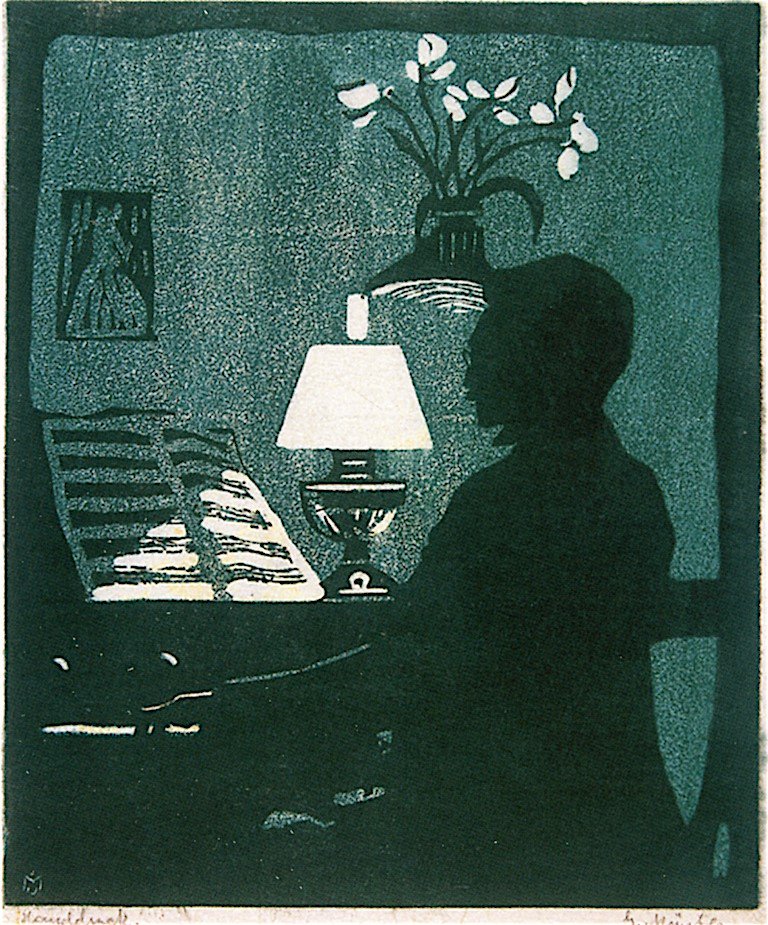
Kandinsky on the Harmonium by Gabriele Münter, n.d.

     Münter did not even find out about the marriage until five years later in 1921 when Kandinsky sent a lawyer to retrieve his paintings from before the war (Smith, 1998). Münter had faithfully and carefully preserved the art during the war and was incensed with the demand of their return. She sued for compensation due to his broken promises and ended up with over 1,000 of Kandinsky’s paintings when the case was settled in 1926, even though the majority of works had been reunited with their creator (P.W., 2013). Münter did not get past this heartbreak easily and painted very little for the next ten years.

     Eventually Münter would find the joy in painting again and continued to personally develop her artistic style well into old age. There can be no doubt of the profound impact Münter and Kandinsky had on one another. They shared an excitement for painting that helped to ignite a passionate romance for over a decade. Their travels and times together exposed them to new concepts of the art world and provided encouragement to their experiments in expressionism. It would not be fair to sum up Münter’s talents to the teaching abilities of Kandinsky, but it would also be foolish to ignore the very real impact the artists had on each other

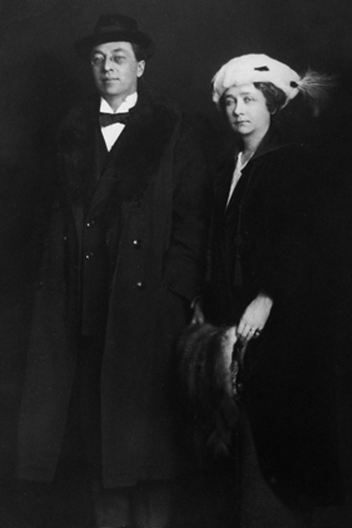
Wassily Kandinsky and Gabriele Münter, n.d.

Münter’s Many Styles: Influences of Expressionism

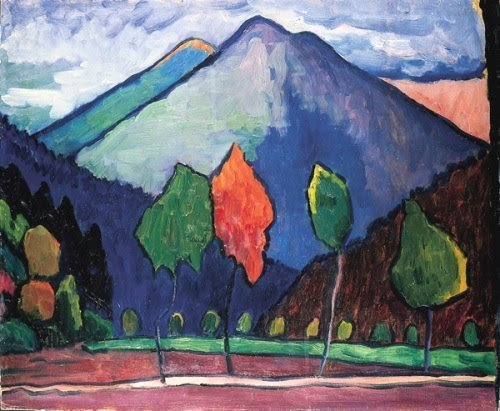
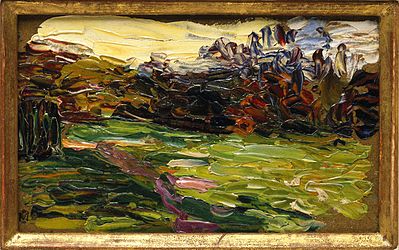
The Blue Mountain by Gabriele Münter, 1909

After a short period of agony, I took a great leap forward from copying nature, in a more or less Impressionist style, to feeling the content of things.” ~ Gabriele Münter

     Gabriele Münter is widely accepted as a fundamental German Expressionist painter, but many different movements influenced and helped progress her personal style. As the opening quote suggests, Münter embraced the freedom of emotional interpretation that became popular in the Modernist movement.

     Born in Germany in 1877, Münter grew up during the rise of Impressionism and was shaped by the way in which the movement lacked the traditional conformity to shape and light. Impressionism grew out of the frustration with Salons’ and Academies insistence on carefully prescribed imagery. The use of paintings to depict realistic scenes for posterity was no longer the primary source for historic imagery after the advent of photography. Social and cultural developments encouraged people to question the status-quo; Impressionism became an example of the progressive times as it sought to capture the fleeting qualities of changing light on ordinary objects and modern scenes (Aste, 2017).

     Münter’s early life gave her roots in the traditional studies of European Realism. Despite the conventions of her time, Münter’s parents encouraged their daughter’s interest in art; even allowing her a private tutor and enrollment in the Women’s Art School in Dusseldorf (Bachrach, 1981). Münter’s early sketches show her innate talent, but the young artist soon found herself uninspired by typical painting.

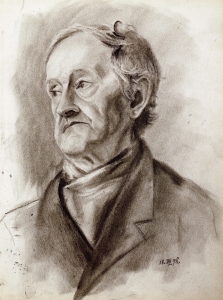
Portrait of a Man by Gabriele Münter, 1898

     Münter enrolled in Phalanx, an unconventional art school, and quickly adapted to the Post-Impressionist style of painting popular at the time. Post-Impressionism incorporated the basic concepts of Impressionist interpretation and pushed the movement even further by going beyond the study of light’s effects and atmosphere to a more subjective form of representation (theartstory.com, n.d.). New painting theories began to develop as artists played with emotion, color, and shape on canvass; Münter’s strokes became bolder as her technique became more expressive.

     Phalanx would prove to be pivotal in Münter’s life as she began life-altering personal and professional relationships. The famed Expressionist painter Wassily Kandinsky was Münter’s teacher at the school and the two quickly began a personal relationship that would last the next twelve years. Münter traveled extensively during this time with Kandinsky and was able to explore different forms of modern painting. Münter created pieces with a pallet knife in 1908 after being taught by Kandinsky, her interest in the Post-Impressionist style continuing to influence her growth as an artist.

     Münter gravitated towards the symbolic conveying of emotion through color and form, so much so that she and Kandinsky spent time in Paris studying the work of modernist artists’ like Matisse and Rousseau. Münter admired the energetic style of the Fauvists and the fluidity of their work. Derived from the French for ‘wild beasts,’ Fauvism described the quick and uninhibited way in which the artists composed paintings. The representational aspect of color was something that Fauvists manipulated so that the color itself could be an independent element of the canvass; saturated and unblended, it allowed tones to be emotional rather than actual (Aste, 2017). The time in France greatly expanded Münter’s artistic vision and her choice in color can be seen shifting to a more Expressionist style in works done after this time.

Nightfall in St. Cloud by Gabriele Münter, 1906

     Münter explored Abstract Expressionism toward the end of her career, still enjoying the striking contrast of bold colors on a canvass. Aligning with the modern art movements of incorporating a range of emotional interpretation to artwork, Abstract Expressionism sought to show the effects of the subconscious in paintings through the use of archetypal symbols and contrasting colors (theartstory.org, n.d.). Abstract Expressionism embraced the avant-garde and while the movement incorporates many different styles like action painting and geometric abstracts, Münter did not stray from the latter. Just a few abstract paintings were completed, but the works meant that Münter never stopped developing her style; even into old age.

     Münter is best known as a German Expressionist painter. Expressionism is often used to as an overarching theme to many of the sub-movements of the early twentieth century, but there are some solid definite aspects of expressionist paintings. Expressionism was about the artwork coming from the unique internal perspective of the artist, a true ‘expression’ of their interpretation of the world. Color was used to impress upon the viewer how the artists felt about a scene and distorted shapes helped to convey powerful personal messages like anxiety or passion (theartstory.org, n.d.).

     Münter’s art shows a clear shift towards Expressionism throughout her career, but it was the evolution of the modern art world through the early twentieth century that led her to the style that made her feel complete. The expressive use of color and undulating lines of a moving perspective gave Münter satisfaction in work; not only is she an Expressionist painter, but she is widely considered one of the founding members of the movement in Germany. That great leap forward from copying nature to feeling a scene helped to solidify Münter as one of the greatest Expressionist artists of her time.

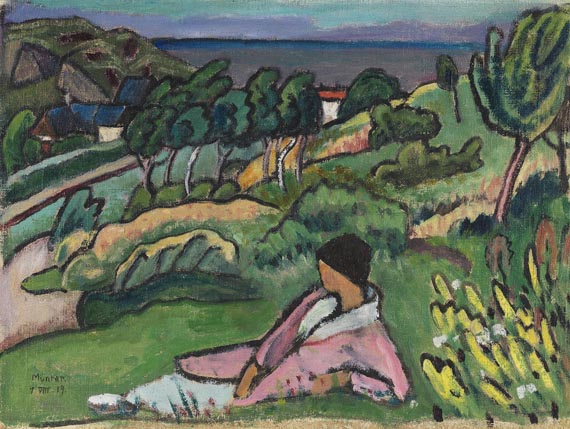
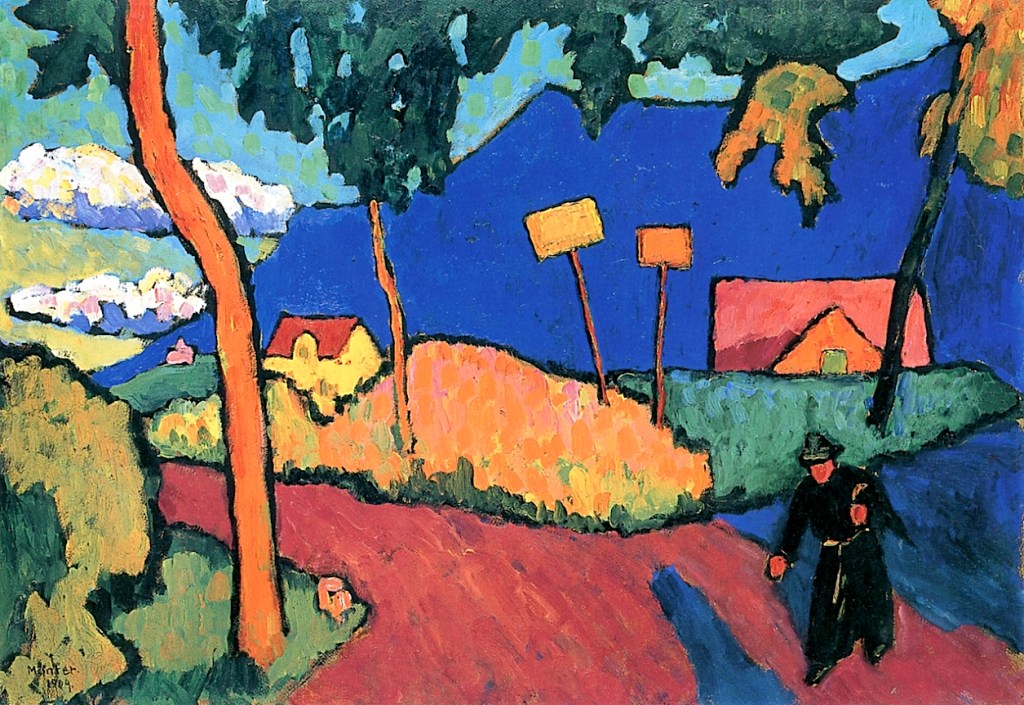
Landscape with Figure by Gabriele Münter, 1919

Gabriele Münter: A Natural Talent

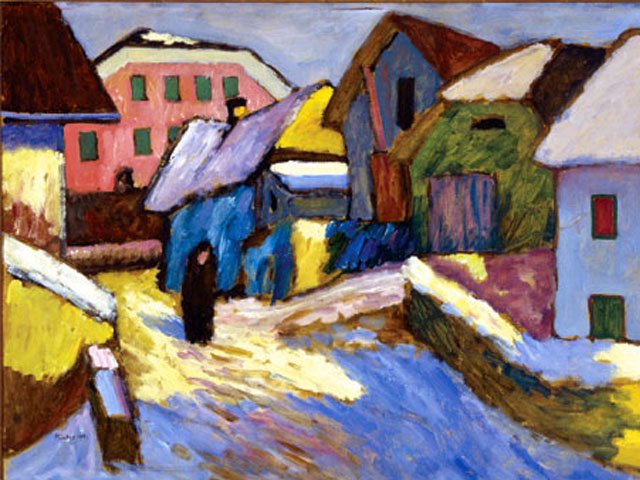
Farmyard in Snow 1 by Gabriele Münter, 1911

It’s impossible to teach you anything. You can only do what’s grown inside you. Nature has given you everything you have.” ~ Wassily Kandinsky to Gabriele Münter 

     Gabriele Münter is widely accepted as a founding member of German Expressionism and an important figure in the progression of modern art movements; she unknowingly pushed the boundaries of traditional art interpretation to include the critical aspect of an artist’s emotional and symbolic representation.

     Münter was born in Berlin, Germany on February 19, 1877 to an upper-middle class family (Bachrach, 1981). The young Münter studied the traditional elements of what would be considered a classical education for her time, piano and etiquette was a must, but she was drawn particularly to creating artwork. Her parents actively encouraged Münter’s artistic abilities and even had acquired a private tutor when she was in her teens (Bachrach, 1981). By the age of twenty, Münter had enrolled in the Women’s School of Art after studying briefly under Ernst Bosch in Düsseldorf, Germany.

     Academic learning did not greatly appeal to Münter and after her parents died only a few years apart, she and her sister traveled to stay with family in the United States for an extended visiting 1898 (Gossman, 2017). Münter traveled through America from New York to Texas and whilst touring became prolific in photography. The sizable inheritance from her parents meant autonomy and that she could focus her talents where she wished, something that was difficult for women of her time because of traditional social conventions.

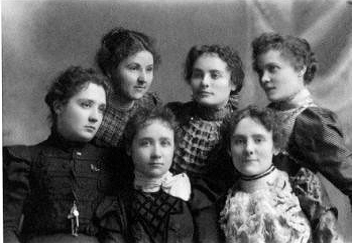
Gabriele Münter and her sister Emmy with their cousins in St. Louis, 1898

     When returning to Germany in 1901, Münter continued to explore her unique freedom and enrolled in classes provided by the Munich Women Artists’ Association. Münter’s time in the school was short as she still did not much appreciate the conventional artistic styles taught, but she did study under known artists like Maximillian Dasio and Angelo Jank while in attendance (Bachrach, 1998). In 1902 Münter enrolled in yet another art school, Phalanx, run by founding member Wassily Kandinsky (wassilykandinsky.net, 2018). The modern approach to art intrigued Münter and the fact that they admitted women, a very progressive stance for the times, made the school a perfect fit for the young artist; the decision would prove to be pivotal in Münter’s life.

     Münter thrived under Kandinsky’s tutelage and the two soon developed a personal relationship, pulled together by their mutual admiration for raw natural artistic talent and physical attraction. There was a problem, however, Kandinsky was married; the fact loomed over the entirety of their relationship. In terms of artistic development though, Münter and Kandinsky fed each other’s genius; both artists were very keen on furthering current art interpretation by imbuing works with the emotional and spiritual essence of the artist.

     The pair traveled extensively throughout Europe and even visited North Africa in their quest for new artistic development (Bachrach, 1998). Münter learned a lot from Kandinsky during this time, but was also greatly influenced by the artistic styles she saw and studied. Münter was moved by the works she saw in Paris, Matisse’s Fauvist paintings in particular, and began incorporating bold expressive colors into her own style (Bachrach, 1981). The lovers continued to push the expressive qualities of painting and became founding members of two art groups, The New Artists’ Association of Munich and The Blue Rider.

Towards Evening by Gabriele Münter, 1909

     The New Artists’ Association of Munich was formed in response to the art-world’s stifling conventional approach to painting and when that group became too constrictive, Kandinsky and Münter left with a few others like Franz Marc to establish The Blue Rider (Koerner von Gustorf, n.d.). The newly created group focused on using colorfully symbolic imagery to express the inner thoughts and feelings of the creator. While only in existence for two years, The Blue Rider is credited with helping to bring about German Expressionism. New art theories were explored within the group and the few exhibitions they held opened society’s eyes to modern styles. The Bleu Rider ended in 1914, two years after it began, due to the outbreak of World War I; a moment again that would prove to be pivotal in Münter’s life.

     With Germany declaring war on Russia in 1914, Münter’s Russian born lover Kandinsky became an enemy alien overnight; he had to leave Germany immediately. Münter and Kandinsky would see each other once more in the winter of 1915, but Münter did not know that would be the last time she was with her lover; Kandinsky stopped responding to her letters and did not speak to her again (wassilykandinsky.net, 2018). She did not know until 1921, when Kandinsky sent a lawyer for his pre-war artworks, that he had returned to Russia soon after their meeting and married another woman (P.W., 2013). The revelation devastated Münter as had his absence the previous years; she sued Kandinsky for damages due to his dishonesty and for storing his items throughout the war. Münter won over 1,000 artworks in her suit, but it did little to quell the hurt and anger she felt inside (P.W., 2013).

     Münter subsequently went through a period during the early 1920’s where she produced very few artworks compared to her earlier robust period of creativity; her mourning took years to subside. It was after this time that Münter met the art historian Johannes Eichner, the two began living together in 1929 and Münter resumed the personal development she knew and loved (P.W., 2013).

     Münter never stopped developing her own personal style and it was from artists like her that Expressionism was born. The drive to create scenes that depicted how the artist ‘felt’ the work radically changed the purpose of art; now works depicted what the artist wanted people to see emotionally not just representationally. Münter created abstract works later in her career, but never moved onto the style permanently. Without setting out to do it, Münter had helped establish the Expressionism style.

With Two White Arrows by Gabriele Münter, 1952

     When the Second World War broke out, Münter brought all of the works she had collected over the years with Kandinsky and The Blue Rider and hid them in behind false walls in the basement of her house; she must have done it well because they were never found despite multiple home inspections (P.W., 2013). Her style was considered Degenerate Art and as such would have been destroyed by the Nazi regime if they had been found; many important pieces were saved by her forethought.

     Münter continued to produce pieces as she and Eichner lived out the rest of their days in Murnau, Germany. On her eightieth birthday, Münter donated significant parts of her collection to the Städtische Gallery in Munich so that others would be able to study the works of early Expressionism (lenbachhaus.de, n.d.). Münter died, age 85, on May 19, 1962 in Murnau, Germany. In her will she set up the Gabriele Münter and Johannes Eichner Foundation which cares for her remaining artwork and her home in Murnau.

     Gabriele Münter played a pivotal role in establishing the German Expressionist movement; she unknowingly pushed the boundaries of traditional art interpretation to include the critical aspect of an artist’s emotional and symbolic representation. The modern art world owes a lot to her determination and creativity.

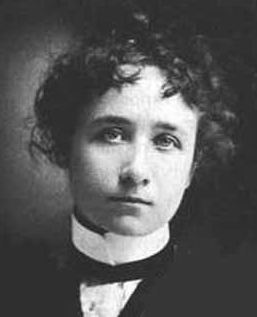
Gabriele Münter